
Zero Grid Capacity. 50+ Large Electric Vehicles. 24/7 Operation. Inside SparkCharge's Power Deployment at the United States' Largest Tennis Tournament
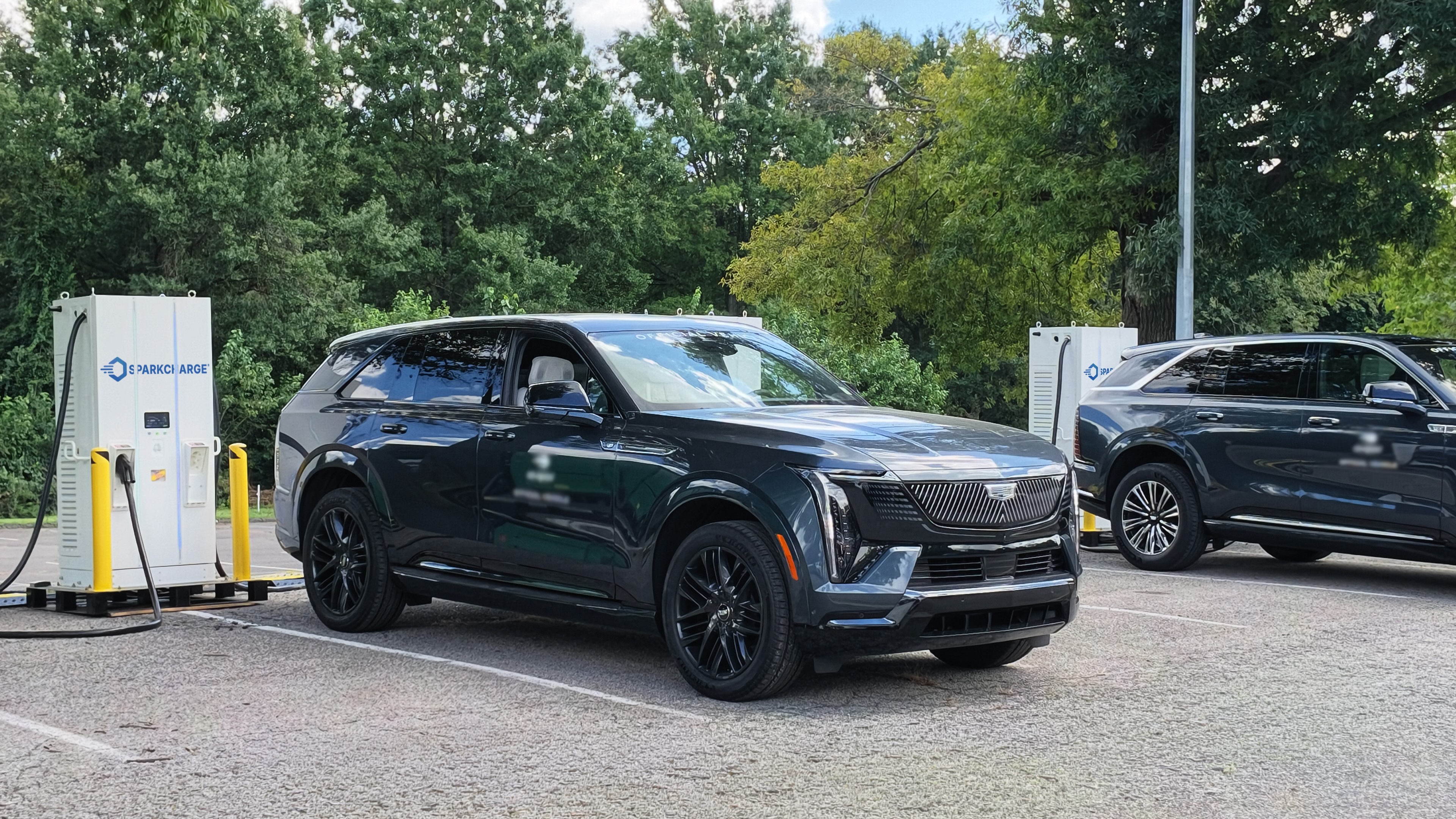
When the United States' largest tennis tournament opened in New York City in August, the operations team faced a problem that had nothing to do with tennis: how do you keep a 50-vehicle fleet of Cadillac Escalade electric vehicles (EVs) charged and ready, around the clock, for three straight weeks, at a venue with no grid capacity?
They didn't build new infrastructure. They called SparkCharge.
The Challenge
The Escalade fleet shuttles players and VIPs across tournament grounds and around the city for the full run of the event, from fan week through the men's final in September. That's continuous, high-utilization operation with no room for a vehicle to be caught short on charge, a downed shuttle mid-tournament isn't an inconvenience, it's a logistics failure in front of a global audience.
The venue's existing electrical infrastructure had nothing to give. For a temporary site in a parking lot that is not owned by the tennis stadium, it is not option to build out power for a three-week event.
The Solution
SparkCharge deployed three 500 kW PowerHub systems on-site, paired with five dual-port 180 kW DC fast chargers: 1.5 megawatts of on-site capacity and 10 charging ports dedicated to a single fleet. The full system was operational in less than 24 hours from arrival, built from roughly two weeks of notice.
The deployment runs 24/7 for the full three-week tournament window, independent of any grid. SparkCharge's intelligent energy management software continuously monitors output and demand across all three PowerHub systems, automatically balancing energy flow across the fleet so every Escalade charges at the rate it needs without a person on-site making manual adjustments.
The Results
- 1.5 MW of on-site generation power capacity, fully independent of the grid
- 10 charging ports across 5 dual-port DC fast chargers
- 47,000+ kWh delivered over the course of the event
- 99.99% uptime sustained across the deployment
- Under 24 hours from arrival to full operation
- ~2 weeks of total lead time from request to power-on
- 50+ Cadillac Escalade EVs kept continuously charged and ready for tournament duty
.png)
Why This Matters Beyond the Tournament
This deployment is a clean example of what SparkCharge's distributed energy network is built for: showing up where there is no power to plug into, running unattended at full reliability, and doing it on two weeks' notice instead of the months a temporary grid connection would take. It's also proof that "off-grid" doesn't mean "off-schedule." A 24/7, mission-critical fleet operation ran without a single hour of grid-supplied power for the full three-week length of a major tournament.
"We built this deployment to run at full capacity with zero grid dependency and zero margin for error: three PowerHub systems working in sync, self-monitoring, adjusting in real time, and never touching the local grid. That's the model. Power that's there before anyone has to ask twice," said Yves Toussaint, VP of Operations, SparkCharge.
Power That Shows Up Before the Grid Can
Whether it's a modular data center waiting for an interconnection, an Autonomous Vehicle (AV) fleet expanding into a new city, or a major tournament with zero capacity, the problem is the same: enterprises need power now, and the grid isn't built to move that fast. SparkCharge's distributed energy network exists to close that gap, with intelligent, self-managing systems that deploy in days, not years.
Talk to SparkCharge about event and power deployments →