

Why are Commercial Sites Choosing A Distributed Energy Network?
For most of the past century, energy strategy was not really a strategy at all. You identified a site, applied for a utility connection, waited for it to arrive, and built your operation around it. The grid was the answer to every power question, and the only variable was how long you had to wait.
That model is breaking down. And the businesses that recognize it earliest are the ones building the infrastructure that will define the next decade of commercial operations.
A distributed energy network is the alternative. It is not a niche technology for remote locations or a stopgap for operators who could not get grid access. It is a fundamentally different approach to how enterprises secure, manage, and scale energy, one that brings power to the operation rather than waiting for the operation to connect to power.
This article explains what a distributed energy network is, why the shift is happening now, and which enterprises are building their operations around one.
The Grid Is No Longer a Reliable Planning Assumption
The constraint on enterprise energy expansion is not money or generation technology. It is the physical grid. In Northern Virginia, home to the world's largest concentration of hyperscale facilities, new loads can face a 14-year wait for a grid connection, even as utilities collectively plan $208 billion in grid capital expenditure for 2025 alone.
US data center electricity demand surged from 23 GW in 2023 to 42 GW in 2026. AI racks now require 50 to 100 kW of power, compared to 5 to 10 kW for traditional racks, and US power demand for AI could reach 134 GW by 2030.
Grid constraints are pushing organizations toward rapid adoption of distributed generation and on-site power strategies that bring energy closer to the load.
This is not a regional problem or a temporary congestion event. It is a structural mismatch between the pace at which enterprises need power and the pace at which the grid can deliver it. For any enterprise whose operation depends on power arriving on a specific timeline, the grid has become a risk factor, not a solution.
What Is a Distributed Energy Network?
A distributed energy network is a system of on-site energy infrastructure that generates, stores, and manages power at or near the point of use, operating independently from, or in coordination with, the utility grid.
Where traditional grid-connected infrastructure requires a utility connection before any operation can begin, a distributed energy network brings the power source to the site. It can be operational in days. It scales with the operation rather than requiring a new utility application each time capacity grows. And it integrates with the grid when that connection eventually arrives, transitioning from a primary power source to a permanent grid-tied asset.
A distributed energy network has three core components:
On-Site Generation
Generation systems produce continuous power at the site using fuel sources including natural gas, clean propane, renewable natural gas, and hydrotreated vegetable oil (HVO). Unlike stored energy systems with finite capacity, generation systems run continuously as long as fuel supply is maintained, providing unlimited runtime for high-load operations.
Generation is the backbone of distributed energy deployments where sites need sustained, high-volume power over extended periods. Fuel flexibility is a key operational advantage: the ability to run on multiple fuel types allows operators to optimize for cost, availability, and emissions depending on site conditions and regulatory requirements.
Battery Energy Storage
Battery Energy Storage Systems (BESS) store energy and dispatch it on demand. They provide clean, stable power at the quality levels sensitive operations require, handle peak demand bursts without drawing from the generator or the grid, and in markets with active wholesale energy programs, participate in demand response and capacity markets to generate revenue from stored capacity.
A BESS deployment that powers an operation during an interconnection gap does not become obsolete when the grid arrives. It integrates directly as a permanent grid-tied asset, shaving peak demand, eliminating demand charge exposure, and boosting the site's effective power capacity beyond what the utility connection alone delivers.
Intelligent Energy Management Systems (EMS)
The intelligence layer is what separates a distributed energy network from a collection of hardware. Energy management software monitors the full operating environment in real time: generation output, battery state of charge, site load, grid pricing, and energy market conditions. It coordinates all power sources continuously and autonomously, optimizing dispatch decisions to minimize cost, maximize efficiency, and maintain uptime.
Virtual power plants and distributed energy resource management systems are emerging as central tools for peak demand reductions of up to 20%, with utilities increasingly investing in grid management technology to coordinate distributed assets at scale.
For businesses, this means the distributed energy network does not just replace grid dependency. It actively optimizes the cost of every kilowatt-hour consumed and, in the right market conditions, generates revenue from energy assets that would otherwise sit idle.
Why Are Enterprises Moving Away From Grid Dependency?
The shift toward distributed energy is not driven by environmental preference or regulatory pressure alone. It is driven by operational and financial necessity.
The Interconnection Queue Has Become a Business Risk
According to the Lawrence Berkeley National Laboratory's 2025 Queued Up report, the US interconnection queue holds more than 2,290 GW of active capacity requests, with a median wait time of 4.5 years for projects that reach commercial operation. For large-scale commercial and industrial loads, timelines frequently extend to seven or more years depending on the market.
Grid constraints are intensifying and developers are turning to innovative solutions to bridge the gap. On-site generation is emerging as a key strategy to ensure reliable power delivery and keep projects on track. This shift in power demand has exposed the limits of the traditional utility-centric model.
The interconnection queue is not the only constraint. Wood Mackenzie's Q2 2025 transformer survey found standard power transformer lead times averaging 128 weeks, with substation transformers stretching past 160 weeks in 2026. A confirmed interconnection date does not mean power arrives on that date. It means the process of getting power to that date is beginning.
The Cost of Waiting Is No Longer Abstract
Every month an enterprise waits for grid power is a month of revenue that does not materialize. For a data center, that is compute capacity sitting offline. For an autonomous vehicle (AV) fleet operator, that is vehicles that cannot charge. For a port, that is throughput that cannot move. The financial cost of interconnection delay compounds over time and is increasingly being treated as a line item in project financial models rather than an unquantifiable uncertainty.
The primary constraint on AI infrastructure expansion is no longer capital or technology, but the inability of public electrical grids to deliver sufficient, reliable power. This operational bottleneck is forcing a strategic pivot across the technology industry, away from sole reliance on grid-supplied electricity and toward direct investment in dedicated, on-site power generation solutions.
On-Site Mobile Power Is Becoming the Default, Not the Exception
Because the grid cannot support the surge in demand quickly enough, on-site generation and bridge power solutions are becoming necessary components of the deployment strategy for many organizations. 2026 marks the beginning of the electrification process and it will continue to shape the next decade of infrastructure growth.
A growing number of hyperscalers are looking to bring their own generation and go behind the meter to avoid the long lead times of getting grid connected.
Enterprises that build distributed energy networks are not doing so because they have no alternative. They are doing so because the alternative, waiting on the grid, is increasingly the less competitive choice.
Who Needs a Distributed Energy Network?
Distributed energy networks are not industry-specific. Any enterprise whose operation depends on reliable power at a site where the grid cannot deliver it on the required timeline is a candidate.
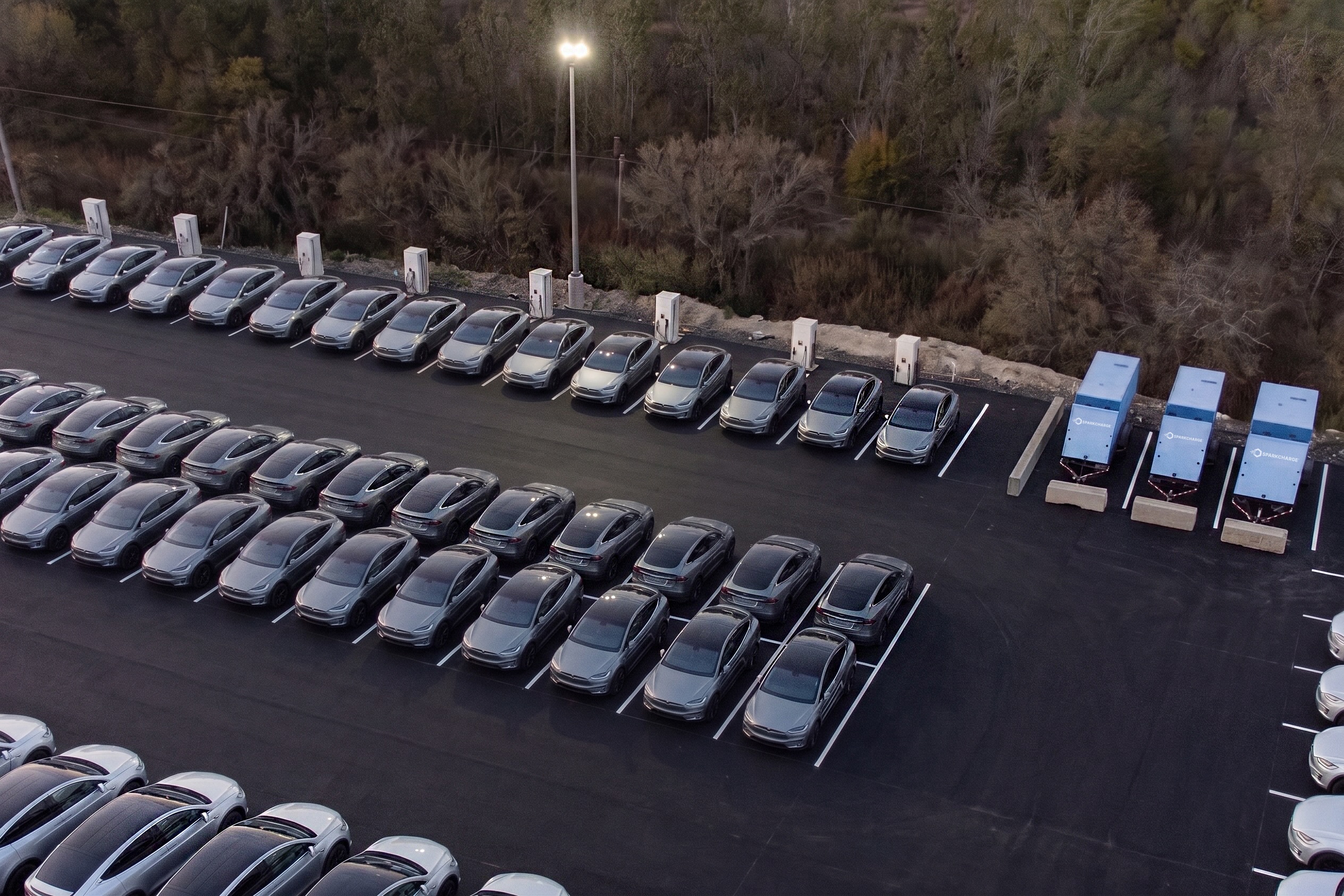
Autonomous Vehicle (AV) Fleet Operators
AV fleet operators expanding their commercial depots face grid upgrade timelines that can routinely run 12 to 36 months. Autonomous vehicle operators expanding city by city need depot energy infrastructure operational before the first route goes live. The vehicle side of the equation is ready. The energy side is the constraint.
A distributed energy network deploys at a new depot in days, keeps vehicles charging on schedule, and scales as the fleet grows without triggering a new utility application or infrastructure rebuild every time capacity needs to increase.
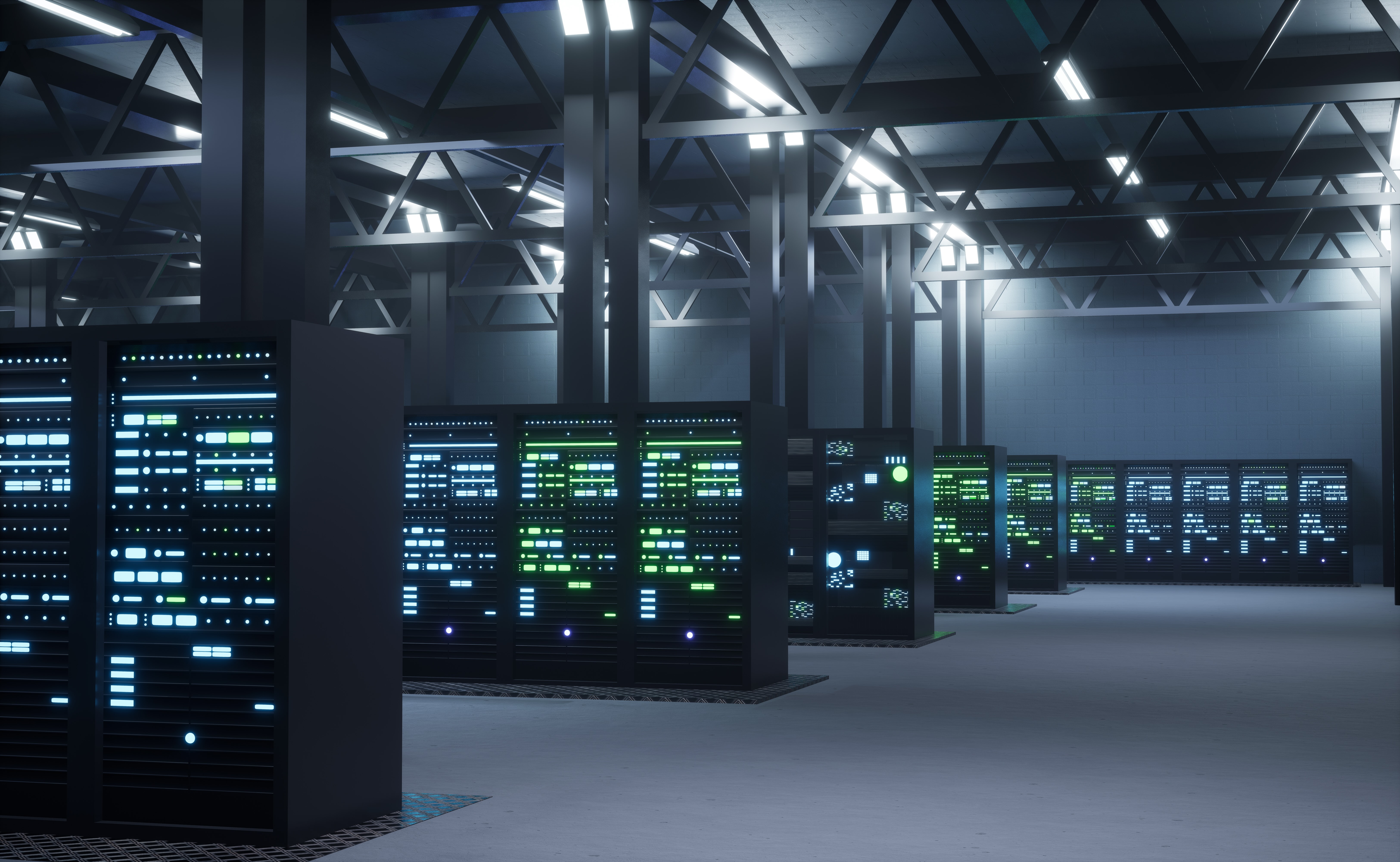
Data Center Developers and Operators
Prefabricated and modular data centers can be delivered and installed in weeks. Grid interconnection takes years. The gap between those two timelines is where billions in compute revenue disappear while operators wait for power that does not arrive on schedule.
A distributed energy network bridges that gap from day one. Battery Energy Storage and on-site generation keep compute racks operational, cooling systems running, and revenue generating before the utility connection exists. When the grid connection eventually arrives, the distributed energy infrastructure transitions into a permanent asset that boosts the site's effective power capacity beyond the interconnection limit.
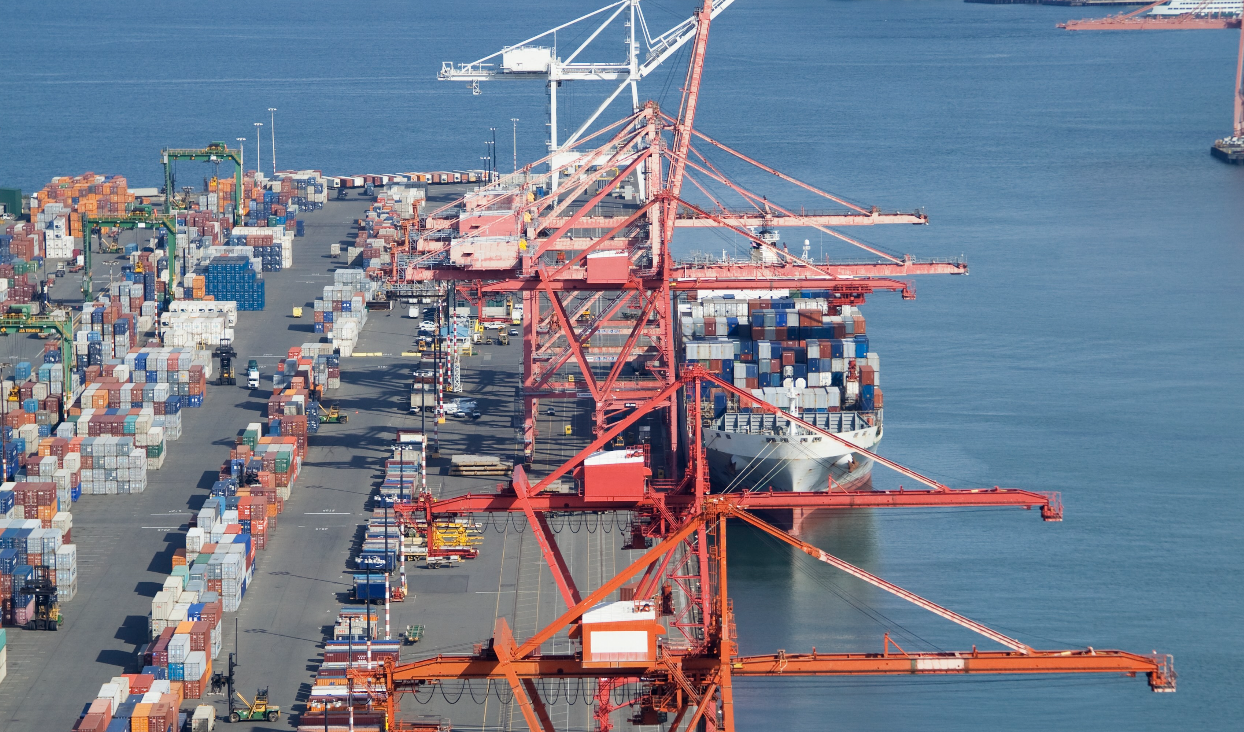
Ports, Logistics, and Industrial Operations
High-volume logistics operations, ports, and industrial sites have historically operated with diesel generators as the default off-grid power source. Tightening emissions regulations, rising fuel costs, and the electrification of heavy equipment are changing that calculus.
A distributed energy network delivers high-volume power across large dispersed sites without permanent infrastructure, scales as electrification spreads across more equipment types, and transitions to cleaner fuel sources as regulatory requirements evolve.
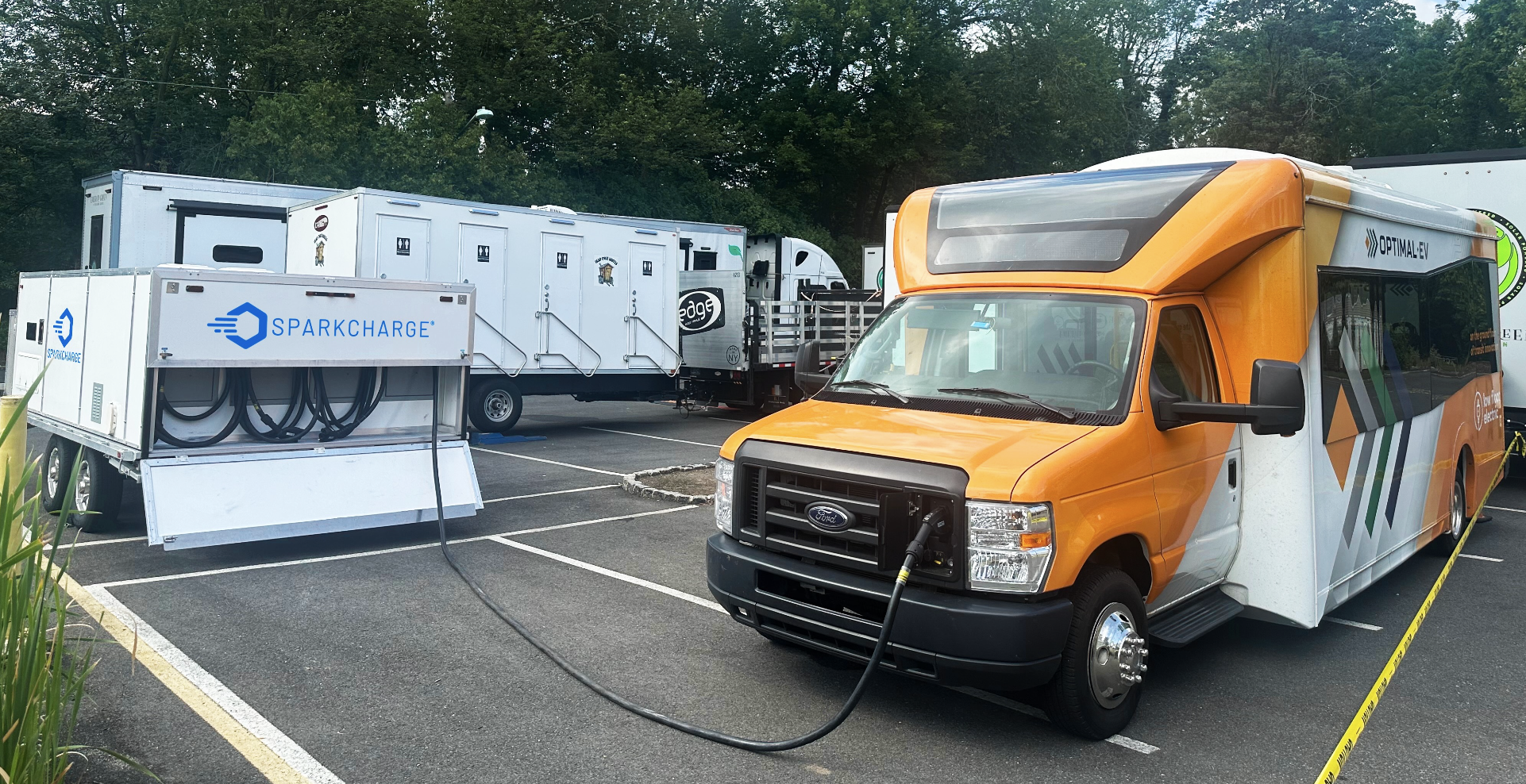
Events, Film, and Temporary Operations
Events, film and television productions, and temporary commercial operations need power that arrives when they do and leaves no permanent trace. Traditional diesel generators are loud, emissions-intensive, and increasingly restricted by local air quality regulations.
A BESS unit delivers silent, zero-emission power at any site in a matter of hours, and removes it just as cleanly when the operation concludes or the film location changes.
How Does A Distributed Energy Network Operate?
The practical architecture of a distributed energy network varies by site, load, and operation. A single Battery Energy Storage System (BESS) at a film production looks a lot different from a combined BESS and PowerHub generation hybrid at a large scale AV depot, which looks different from a multi-unit generation deployment at a data center.
What they share is the operating model. The energy infrastructure arrives at the site rather than requiring the site to connect to a fixed infrastructure point. It becomes operational in days. It is managed autonomously by energy management software that coordinates all power sources in real time. And it scales as the operation grows, without the lead times and capital requirements of permanent grid-connected infrastructure.
The deployment timeline alone separates distributed energy networks from every grid-based alternative. A utility upgrade that takes 18 months gives an operator a fixed infrastructure that is sized for a point in time. A distributed energy network that deploys in 7 days gives an operator a scalable energy system sized for where the operation is today, with the capacity to expand as the operation grows.
From Bridge Power to Permanent Infrastructure
The most important thing to understand about a distributed energy network is that it is not temporary infrastructure. It is a permanent energy strategy that adapts across the full life cycle of a site.
During the pre-grid phase, it is the primary power source. After the grid connection arrives, it becomes a grid-tied asset that works alongside utility power, boosting effective capacity, eliminating demand charges, and participating in wholesale energy markets. The hardware does not change. Its role in the energy strategy evolves.
This is the reframe that changes the financial analysis entirely. Bridge power evaluated as a capital expenditure over a defined bridge period looks like a cost. Bridge power evaluated as the first phase of a long-term energy infrastructure investment that continues to generate value after the bridge period ends looks like a significantly different proposition.
The Intelligence Layer: Energy Management System (EMS)
A distributed energy network is not just hardware. The intelligence that coordinates the hardware is what determines whether the system performs at the level enterprise operations require.
SparkCharge's platform combines two technology layers. SparkAI analyzes more than 500 real-world data points, climate, terrain, site specifications, available power sources, and operational patterns, and generates a custom infrastructure plan for any site in under 60 seconds. What used to require weeks of engineering assessment can now happens before the meeting ends.
SparkEMS, SparkCharge's Energy Management System, manages every deployed energy system continuously and autonomously. It monitors PowerHub generation output, battery state of charge (SOC), grid availability and pricing, and energy in real time. It makes dispatch decisions to minimize fuel cost, maximize efficiency, and maintain uptime without requiring on-site staff.
The intelligence layer is the operational moat. The enterprises building operations around a distributed energy network are doing so because the system manages itself at a standard that grid-dependent infrastructure cannot match.
What This Means for Enterprise Energy Strategy
The enterprises that will define the next decade of commercial operations are the ones building energy independence into their infrastructure strategy now, not after the grid has forced them to.
That does not mean abandoning the grid. SparkCharge's distributed energy network is built to complement the grid. To deliver energy when an enterprise needs power, and then to integrate with the grid as a permanent asset when it arrives. The grid is not the enemy. It is the destination. A distributed energy network is how you get there ahead of schedule.
As load growth accelerates and grid constraints intensify, the enterprises with distributed energy infrastructure in place will be the ones with the operational flexibility, cost efficiency, and resilience that grid-dependent operations cannot match.
The question is not whether your operation needs a distributed energy network. It is whether you build one before the grid forces the decision, or after.