The conversation around electrification tends to focus on hardware and infrastructure. How many batteries. How many kilowatts. How many sites. What gets talked about less is the workforce required to deploy and maintain all of it, the people who show up on site, commission the equipment, and keep enterprise energy infrastructure running at 99.9% uptime.
SparkCharge believes that workforce is just as important as the technology. This summer, we put that belief into practice.
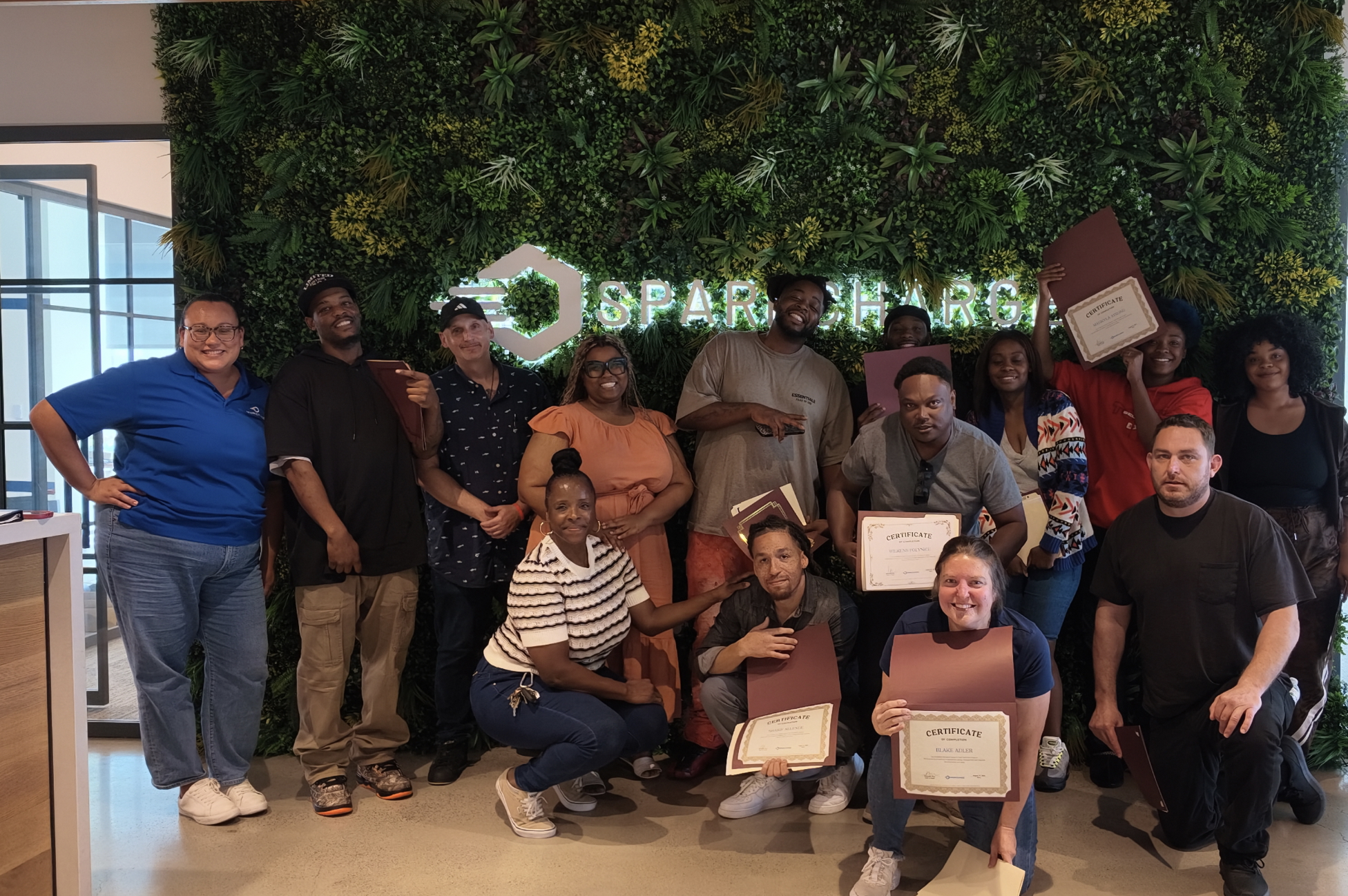
We are proud to share the completion of SparkCharge's first annual EV Technician Training Program, held over two weeks at our headquarters in Somerville, Massachusetts. Every participant in this inaugural cohort came from environmental justice communities across Massachusetts, people who applied online, who showed up, and who left with the certifications and hands-on skills to build careers at the intersection of clean energy and advanced technology.
This is what investing in the future of distributed energy actually looks like.
What the Program Covered
We designed the electric vehicle (EV) Technician Training Program to be comprehensive and practical. Participants were not just in a classroom watching slide decks. They were on the floor, hands-on with the equipment, learning the systems that power enterprise operations from the ground up.
The two-week program covered:
Battery Energy Storage Systems (BESS)operations
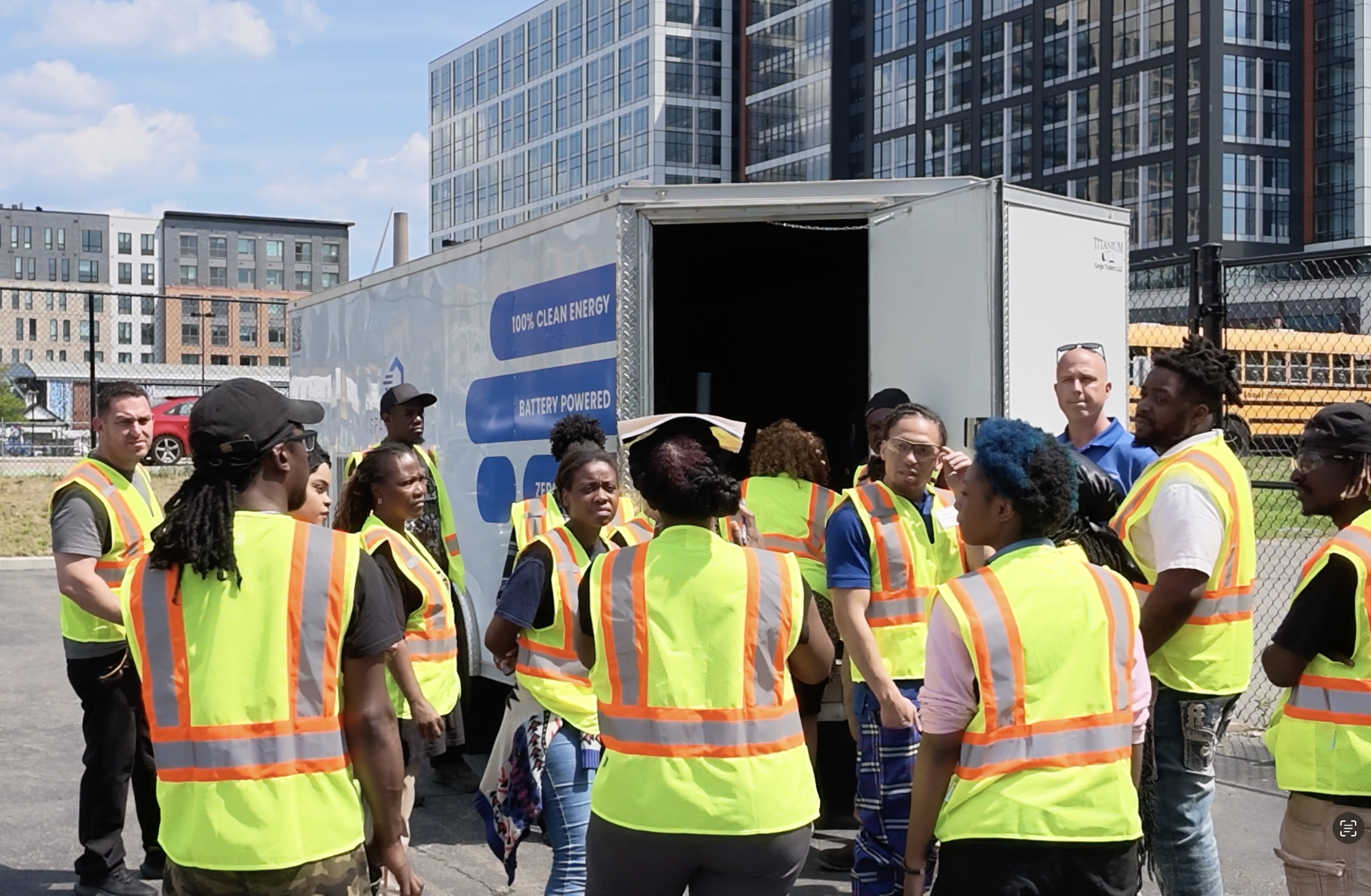
Participants worked hands-on with SparkCharge's Battery Energy Storage Systems (Bess) from day one, not in simulation, but on live equipment. Adam Urban, SparkCharge's CTO, and Kenn Brown, lead engineer, walked the cohort through the full operational picture: how to power a BESS unit on and off, how to charge an EV from the system, how to recharge the battery, and how to position and place units correctly in the field across different deployment configurations.
Beyond the physical operation, participants learned how to work with SparkCharge's CMS, the live monitoring system that sits behind every deployment. They learned to read real-time state of charge data, interpret live charging session metrics, and use the CMS as a troubleshooting tool the way our field and customer success teams do daily. Understanding how to identify and diagnose issues remotely through live system data is one of the skills that separates a capable technician from an exceptional one. The cohort trained on it directly with Matt Couillard, our Sr. Customer Success Manager.
Participants worked with both single-unit and multi-unit BESS configurations, gaining familiarity with the scale and setup differences that different deployment environments require.
PowerHub Generation site setup
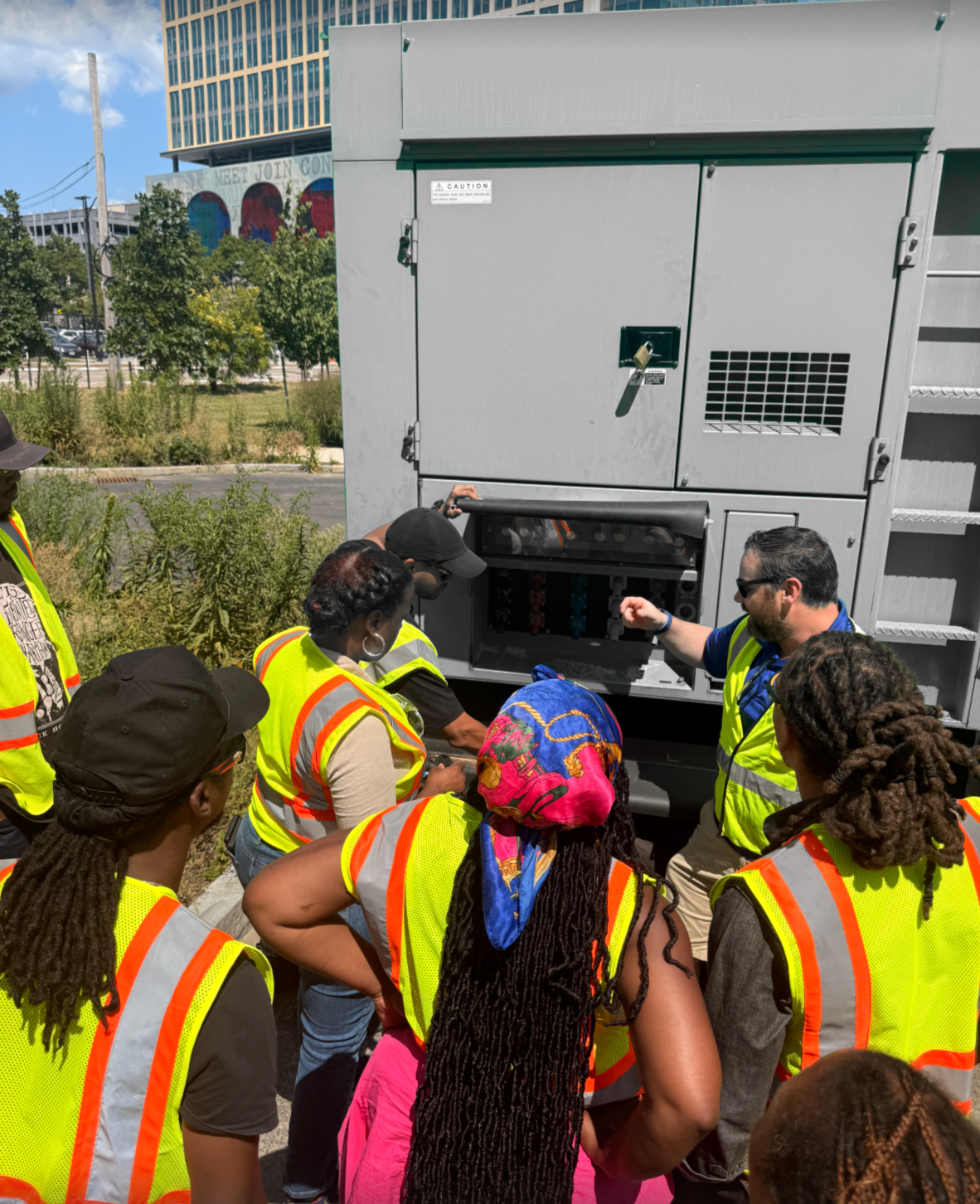
Participants completed full end-to-end PowerHub deployments, the same process our field teams run when standing up on-site generation for commercial customers. That meant hands-on cable setup and connection, positioning and commissioning generation units, connecting charging stations to the system, and learning refueling procedures across multiple fuel types. They did not observe this process. They executed it.
The program covered both single-unit and multi-unit PowerHub configurations, and participants learned how generation and Battery Energy Storage work together as a hybrid system, how the generator feeds the battery, how the battery handles peak demand and load smoothing, and how our CMS tool coordinates both autonomously in the field. Understanding the full system, not just individual components, is what the curriculum was designed to build.
Multi-site management and service operations.
Matt Couillard, SparkCharge's Senior Customer Success Manager, walked participants through how to manage multiple sites simultaneously and the service model behind our 99.9% uptime guarantee. Knowing the technology is one thing. Knowing how to keep it running at enterprise standards across a portfolio of deployments is another skill entirely.
Safety certification: NFPA70e.
David Ritter certified every participant in NFPA70e, the National Fire Protection Association standard for electrical safety in the workplace. This is one of the most important and widely recognized safety credentials in the energy and electrical trades. Every technician who completed the program is now NFPA70e certified.
OSHA safety training.
Participants completed OSHA safety training as part of the core curriculum, ensuring they are equipped to operate safely across the variety of site conditions and environments SparkCharge works in.
Forklift certification.
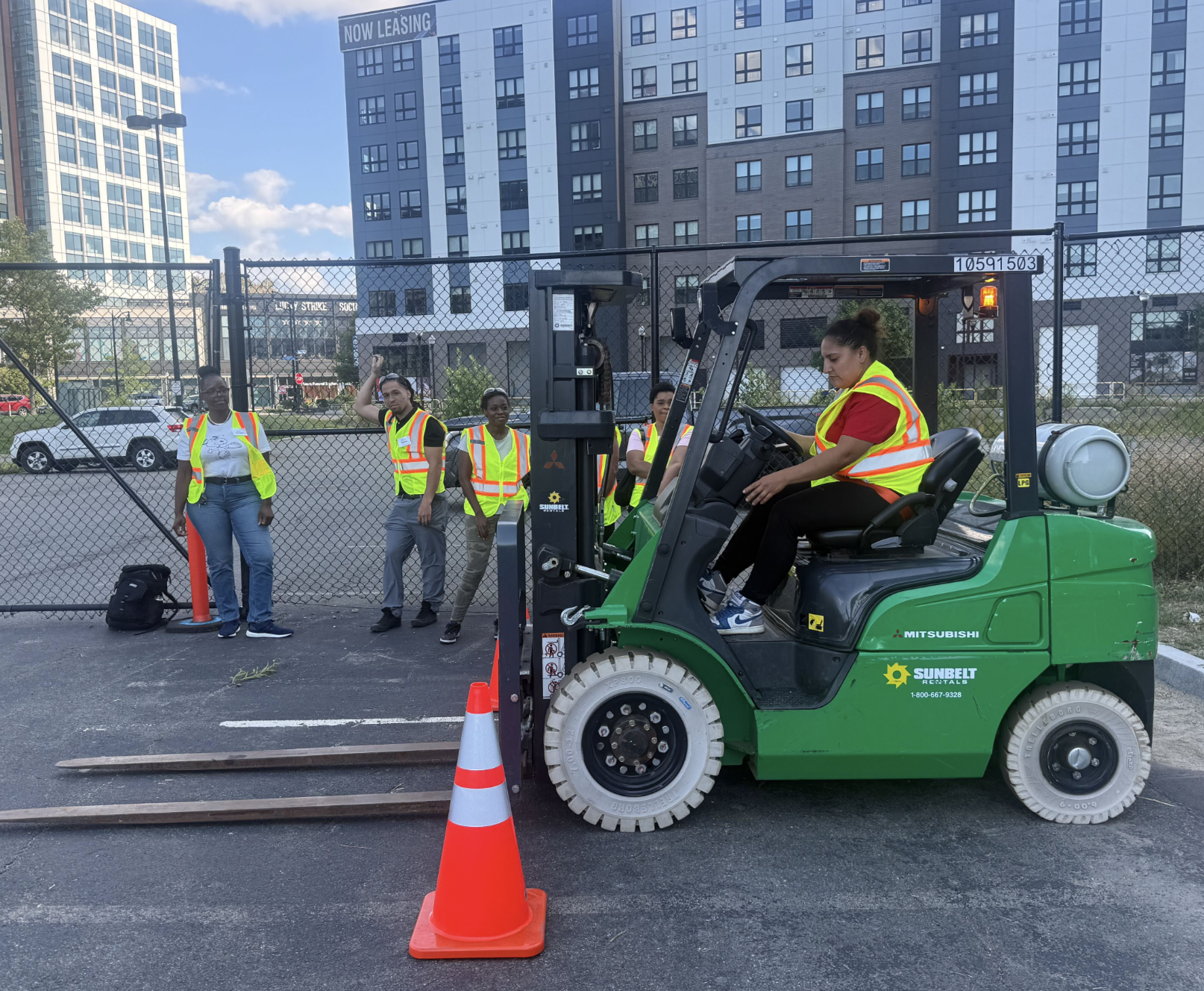
Deploying large-scale energy infrastructure means working with heavy equipment. Every participant completed and received their forklift certification as part of the program. An important skill and certification that every participant can utilize after the program.
The Certifications
Every technician who completed SparkCharge's first annual cohort left with three credentials:
- SparkCharge EV Technician Certification
- NFPA70e Electrical Safety Certification
- Forklift Certification
These are not just participation certificates. They are industry-recognized credentials that open doors in the clean energy, electrical, and infrastructure trades, and they are the same standards SparkCharge holds its own field teams to.
Why Environmental Justice Communities
Electrification creates jobs. That is not a future promise, it is already happening. But the question of who gets access to those jobs, and what pathways exist for people in underserved communities to enter the clean energy workforce, is one the industry has not answered well.
The decision to recruit this inaugural cohort specifically from environmental justice communities in Massachusetts was intentional. These are communities that have historically borne a disproportionate share of pollution and environmental harm, and they should be at the forefront of the clean energy transition that is meant to address it. Accessible, high-quality workforce training is one concrete way to make that happen.
Every participant applied online and earned their place in the program. The cohort's completion is something the entire SparkCharge team is proud of.
What Comes Next
This was the first annual cohort.
SparkCharge's goal is to grow this program, expanding the number of participants, deepening the curriculum, and reaching more communities across the country as our deployment footprint grows. The clean energy economy needs skilled technicians at scale. We intend to help build that pipeline.